The World Is Talking About Family Inequality. Nyaka Has Been Living the Answer.
Today, at United Nations Headquarters in New York, the world observes the 2026 International Day of Families under the theme “Families, Inequalities and Child Wellbeing.” The UN’s background note for this observance makes a pointed argument: that child development outcomes cannot be addressed without first addressing the family context in which children are born and raised, and that policymakers have been too slow to act on this.
At Nyaka, this is not a new insight. It is the founding principle we have worked from for over two decades in rural southwestern Uganda.
And it has a face. Her name is Florence.
One Grandmother, Six Children, and a Wish for Fairness
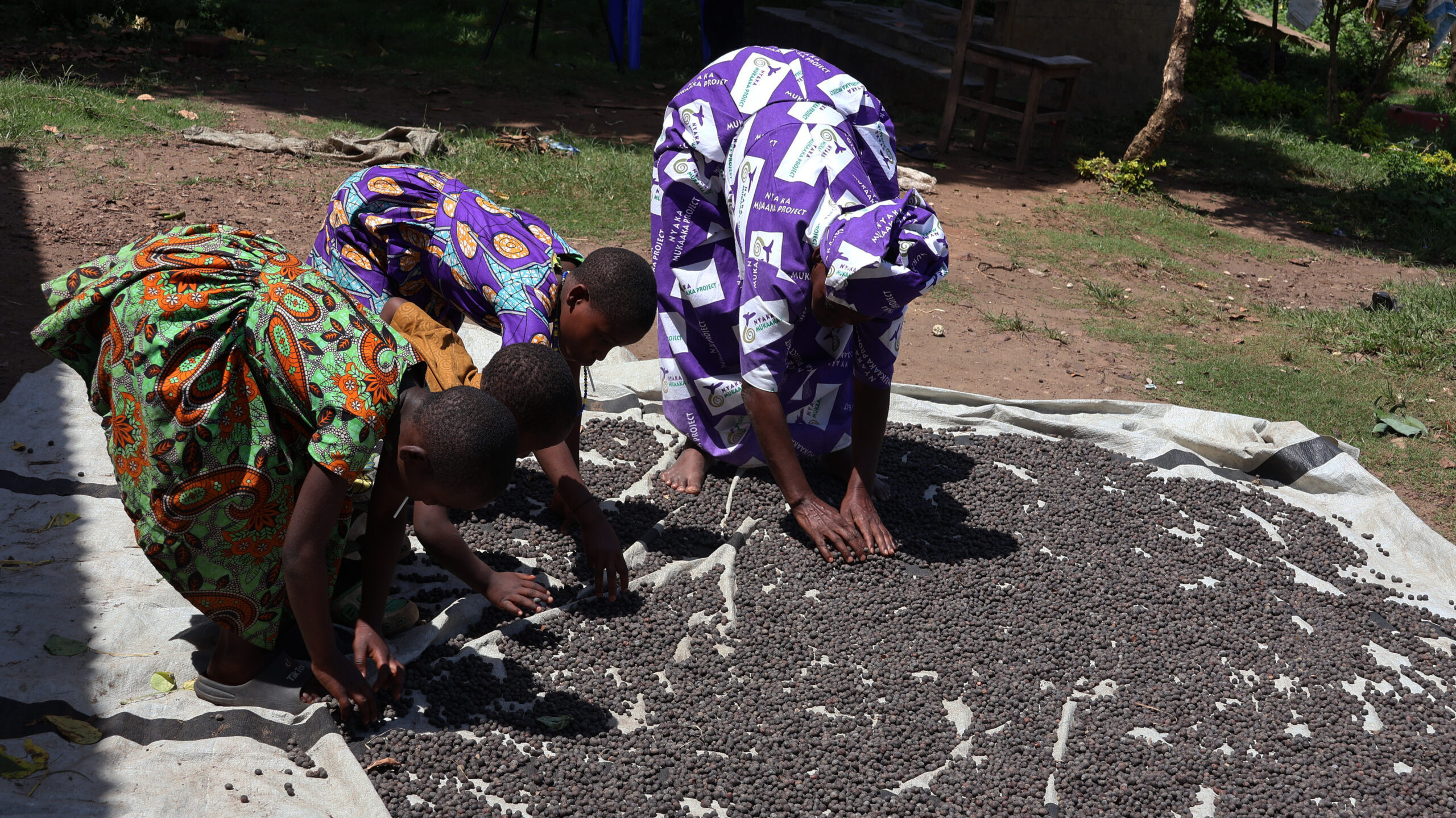
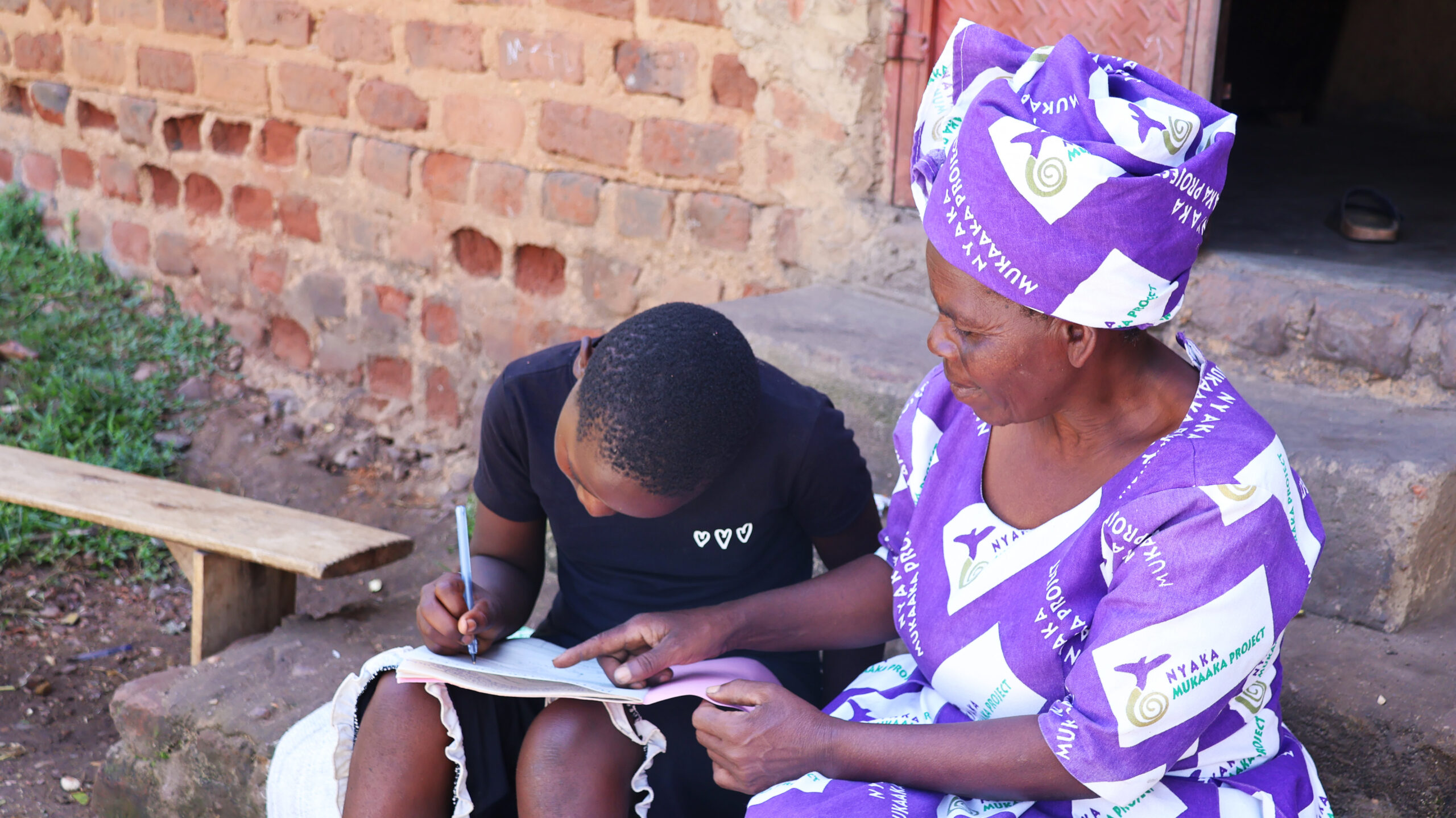
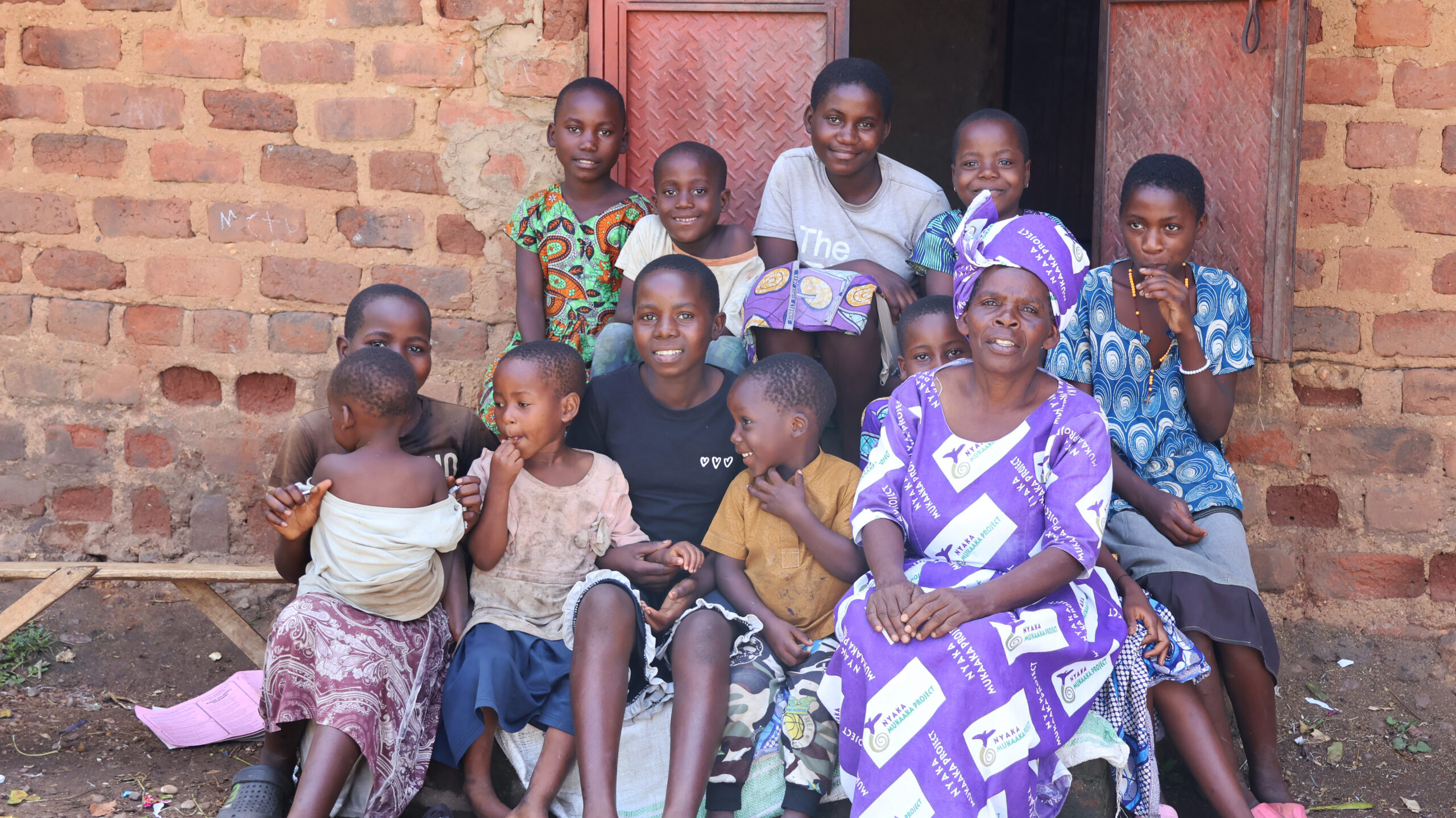
Mukaaka Florence lives in Bugongi, Kanungu District. Six grandchildren sleep under her roof. By day, she sells avocados. By night, she worries about malaria, about school fees, about the long walk for water that turns dangerous after dark.
“I have raised many children,” she says quietly.
For Florence, love is not a feeling. It is a back that carried a sick granddaughter through an entire night. There are five children in school, and one who already dreams beyond Primary 7. It is getting up every morning to keep going, even when the nearest clinic is far, and the road to water is not safe.
Florence is far from alone. Uganda had approximately 3 million orphaned children below the age of 18 in 2024, around 13% of all children, according to the Uganda Bureau of Statistics. The majority are in rural communities, and most are being raised not by institutions but by grandmothers. UNICEF estimates that households headed by elderly relatives face poverty rates up to 29% above the national average, and research shows that nearly one in three of Uganda’s orphans and vulnerable children never complete primary school.
Compared to other families in her village, Florence’s grandchildren have less access to medicine, less certainty about fees, and less protection from the risks that pile up when a household is stretched thin. When malaria strikes, Florence walks. She always walks.
Through Nyaka’s Grandmother Program, Florence has received water tanks, school materials, and support for her micro-business. Nyaka Microfinance has extended its loans at low interest dignity, not charity, as she frames it. These interventions have not solved everything. But they have given her household a fighting chance.
Her one wish on this International Day of Families is clean water closer to home. Because, as she puts it, no child should risk their life on a dark road just for fetching water. It is a wish that reflects a national reality: only 67% of rural Ugandans have access to clean water, and many walk more than 30 minutes to reach a water point. In Kanungu District, where Nyaka works, water coverage remains among the lowest in the country.
“I raise these children with love,” she says. “One day, they will become people who can fix what is broken.”
What the UN Is Saying and What Florence Already Knows
The UN’s 2026 observance draws on a growing body of research showing that inequality is not simply an economic problem; it is a family problem. When households face income instability, limited access to services, and weak caregiving support, the effects compound across generations. Children in these environments are more likely to experience poor nutrition, reduced educational attainment, and restricted social mobility outcomes that persist well into adulthood.
Florence’s household is a precise illustration of this dynamic. It is also an illustration of what the research says can change it.
The UN document calls explicitly for community-based family support services, investment in caregiving capacity, and integrated social protection systems designed around the needs of the family unit. It acknowledges a stubborn gap: in most low- and middle-income countries, spending on young children remains low, family policies are fragmented, and early intervention is treated as discretionary rather than essential.
Uganda sits squarely within that gap. Florence lives inside it.
Nyaka’s Model as a Policy Response
The UN calls for good practices in family policymaking to be shared at the international level. Nyaka’s Grandmother Program is one such practice.
Rather than removing orphaned children from their communities,s the default response in many institutional frameworks is that Nyaka invests directly in the family unit that remains. Today, Nyaka supports more than 23,000 grandmothers caring for more than 92,000 children across southwestern Uganda, most of whom are not their biological grandchildren, but children absorbed into households already stretched thin by poverty and loss. Grandmothers receive psychosocial support, economic empowerment, access to healthcare, and connection to a peer network through grandmother groups. Children in these households receive school fees, meals, school supplies, and health monitoring.
The result is a strengthened caregiving environment that breaks, rather than reinforces, the intergenerational cycle of disadvantage that the UN describes. Florence’s grandchildren are in school. Her business is growing. Her household has water storage. None of this happened by accident — it happened because someone invested in the caregiver, not just the child.
This is not a charity model. It is a family systems model — one that treats the household as the unit of intervention, builds its resilience from within, and produces measurable improvements in child health, school attendance, and food security.
It is also the model the UN is now urging governments to build policy around.
The Policy Gap We Must Close
The 2026 International Day of Families observance is linked to the Doha Political Declaration of the Second World Summit for Social Development, which calls on member states to integrate the family as a central enabler of social development and to promote policies that invest in early childhood and family wellbeing.
For Uganda and other low- and middle-income countries, this commitment must translate into concrete action:
National social protection frameworks must explicitly include grandparent-headed and extended family households, not just nuclear family units,s as eligible beneficiaries. Uganda’s 3 million orphaned children are overwhelmingly in these households, yet the government allocated just 0.2% of the national budget to social protection in 2024/20,25 less than what was budgeted for “special meals and drinks” in that same cycle.
Child benefit programmes must reach the most remote communities, where informal caregiving arrangements are most common and formal systems are least present.
Early childhood investment must be treated as a fiscal priority, not a discretionary line item. The evidence is unambiguous: early investment in family stability produces long-term returns in human capital, productivity, and reduced public expenditure on remediation.
Water, sanitation, and infrastructure must be recognised as family policy because a grandmother walking a dangerous road at night to fetch water for her grandchildren is not an infrastructure problem in isolation. It is a child well-being crisis. Only 8.8% of Ugandans have access to safely managed water services,s a figure that is considerably lower in rural districts like Kanungu.
Community-based organisations with demonstrated track records of reaching vulnerable families must be recognised as implementation partners in national social policy,cy not as substitutes for the state, but as essential connectors between policy and people.
A Call to Policymakers: Don’t Let Families Like Florence’s Be Forgotten Again
Florence’s wish is modest. Clean water, closer to home. It is also, in its modesty, an indictment. That this wish remains unfulfilled for her and for countless grandmothers like her across Uganda and the region reflects exactly the policy failure the UN is naming this International Day of Families.
We call on policymakers in Uganda, across Africa, and at the multilateral level to move beyond acknowledgement and toward commitment. The evidence base for investing in family-centred, community-grounded social protection is robust. What has been missing is the political will to act on it.
Families like Florence’s are not edge cases. They are the face of a global pattern of inequality that the UN has now named plainly. They deserve more than recognition. They deserve a policy that sees them, reaches them, and invests in them before another generation of children grows up carrying burdens that good governance could have lifted.
Nyaka stands ready to engage with governments, UN agencies, and civil society partners to advance policy frameworks that put all families, including the most marginalised, at the centre of social development.
Florence is still walking. Policymakers should be, too.
Support the Nyaka Grandmother Program
This International Day of Families 2026, sponsor a grandmother like Florence. Your support provides water, school fees, healthcare, and small business loans, the integrated, family-centred investment the world’s policymakers are calling for, delivered directly to the households that need it most.