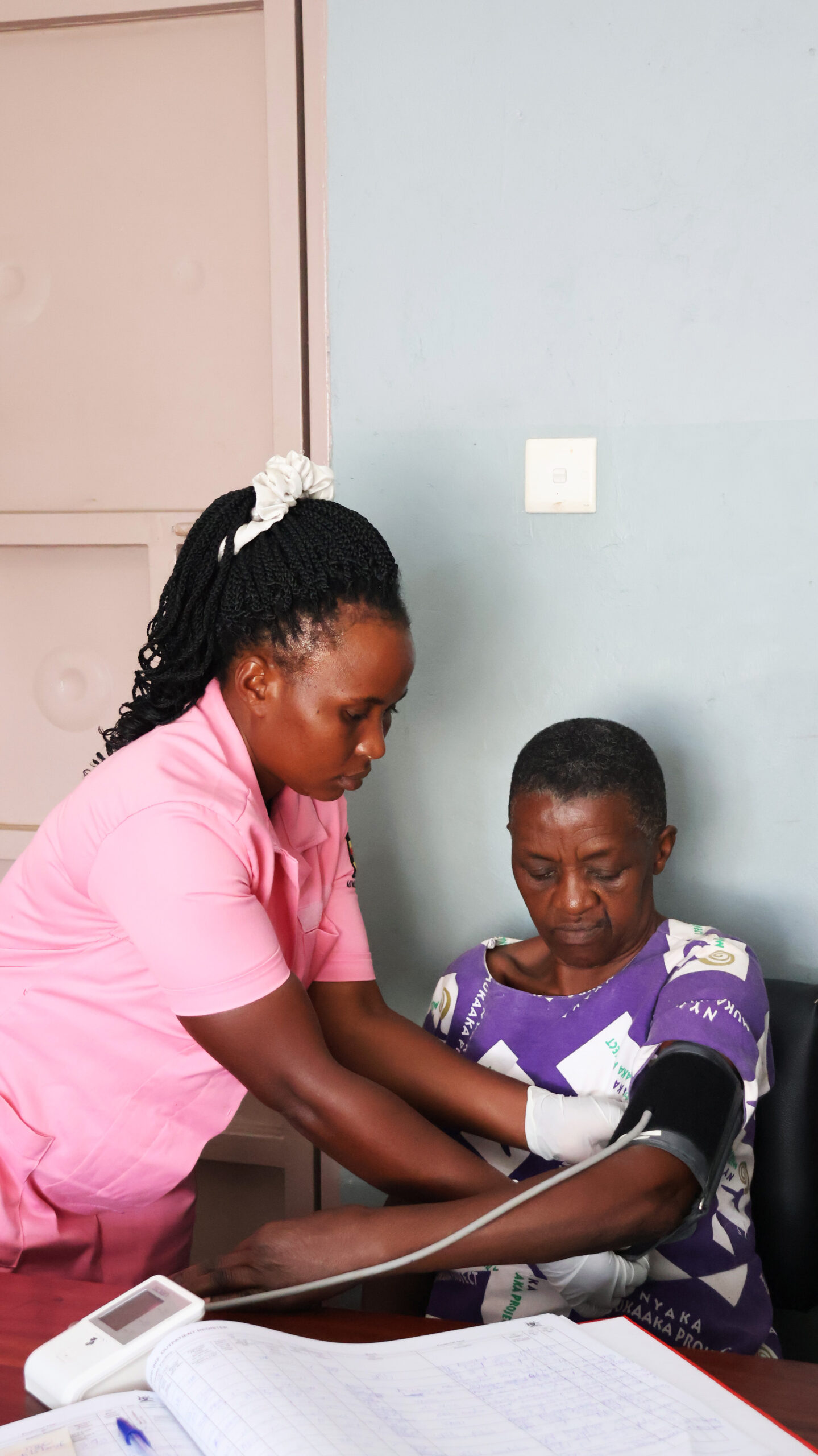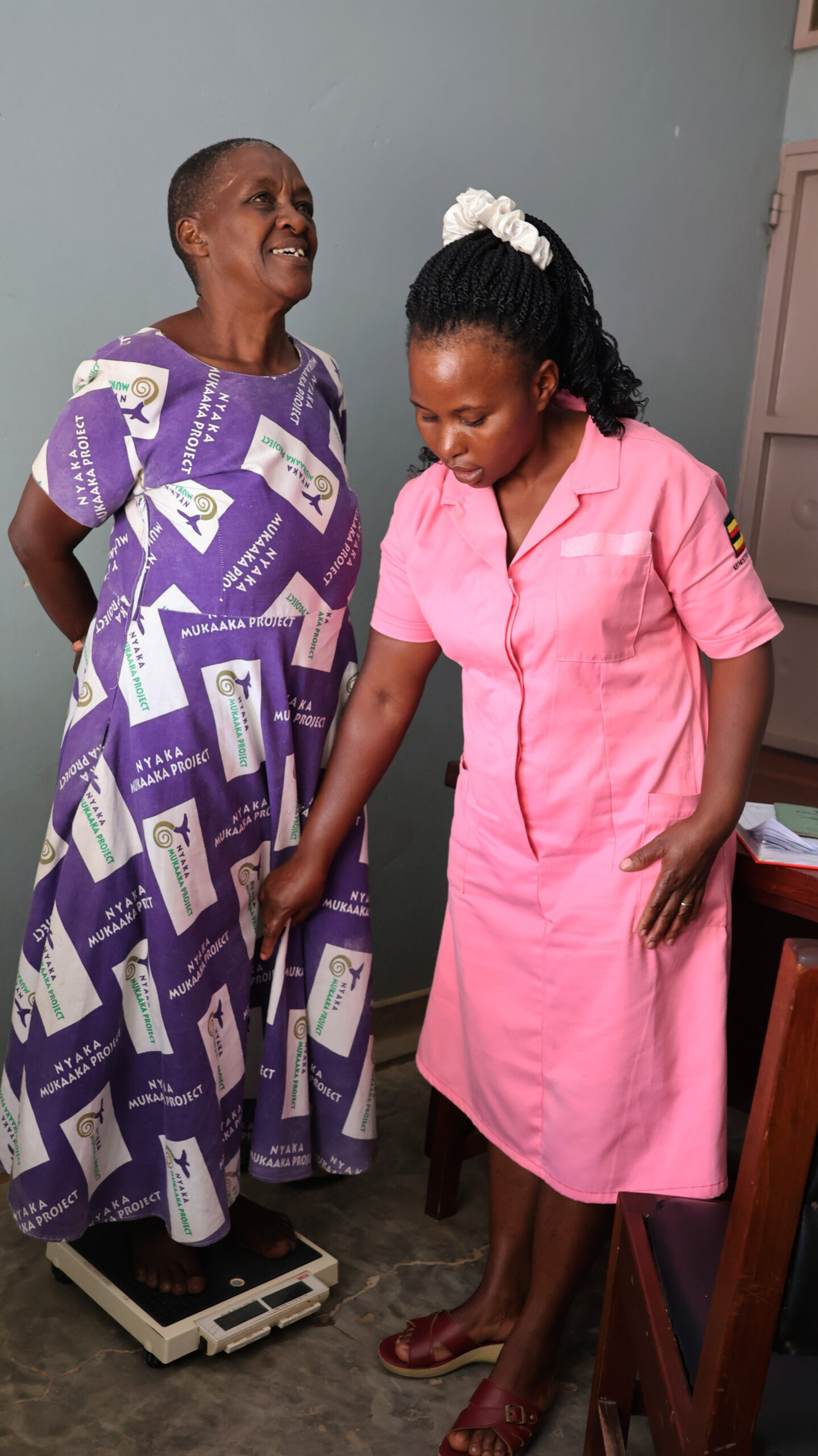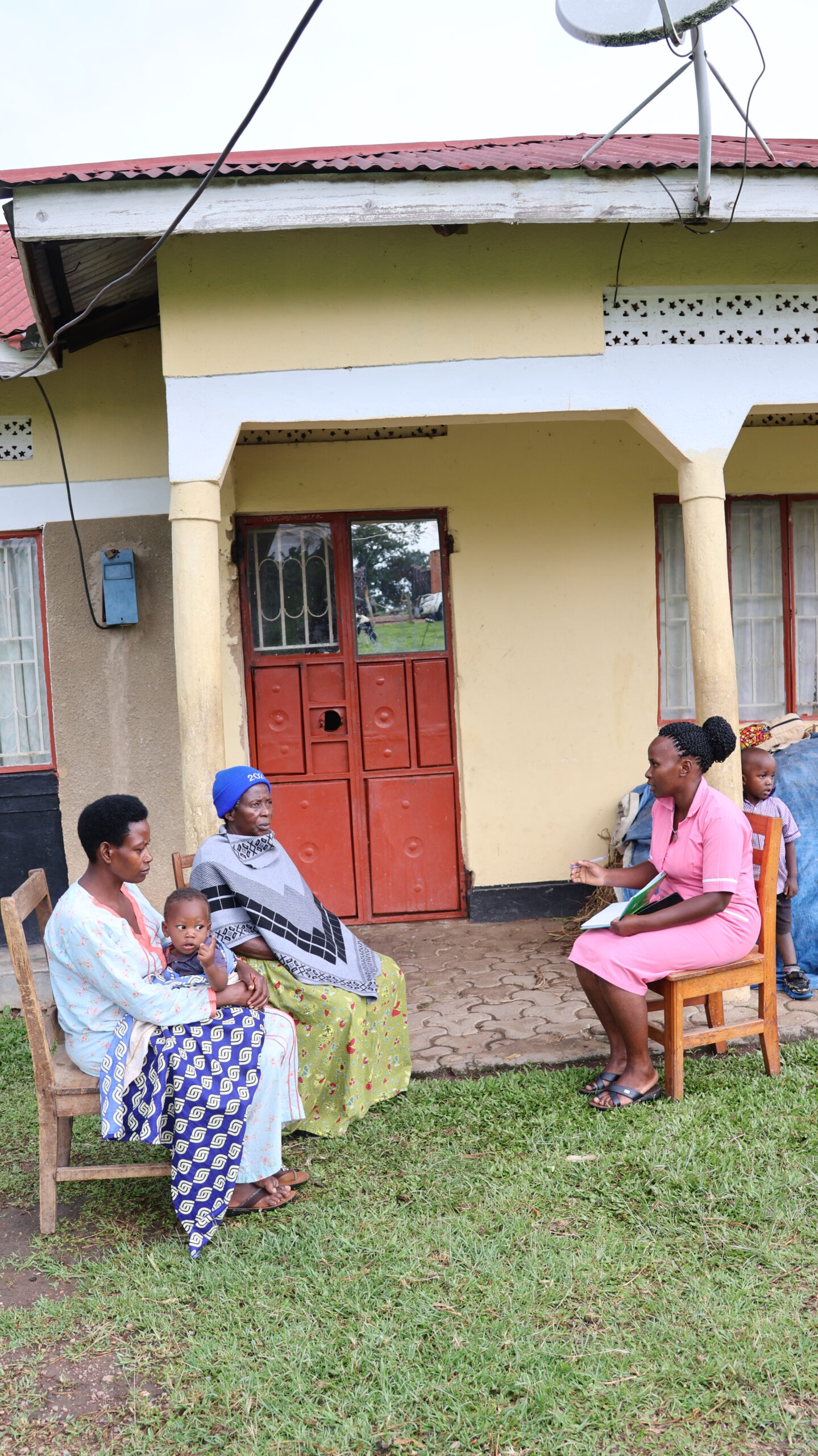
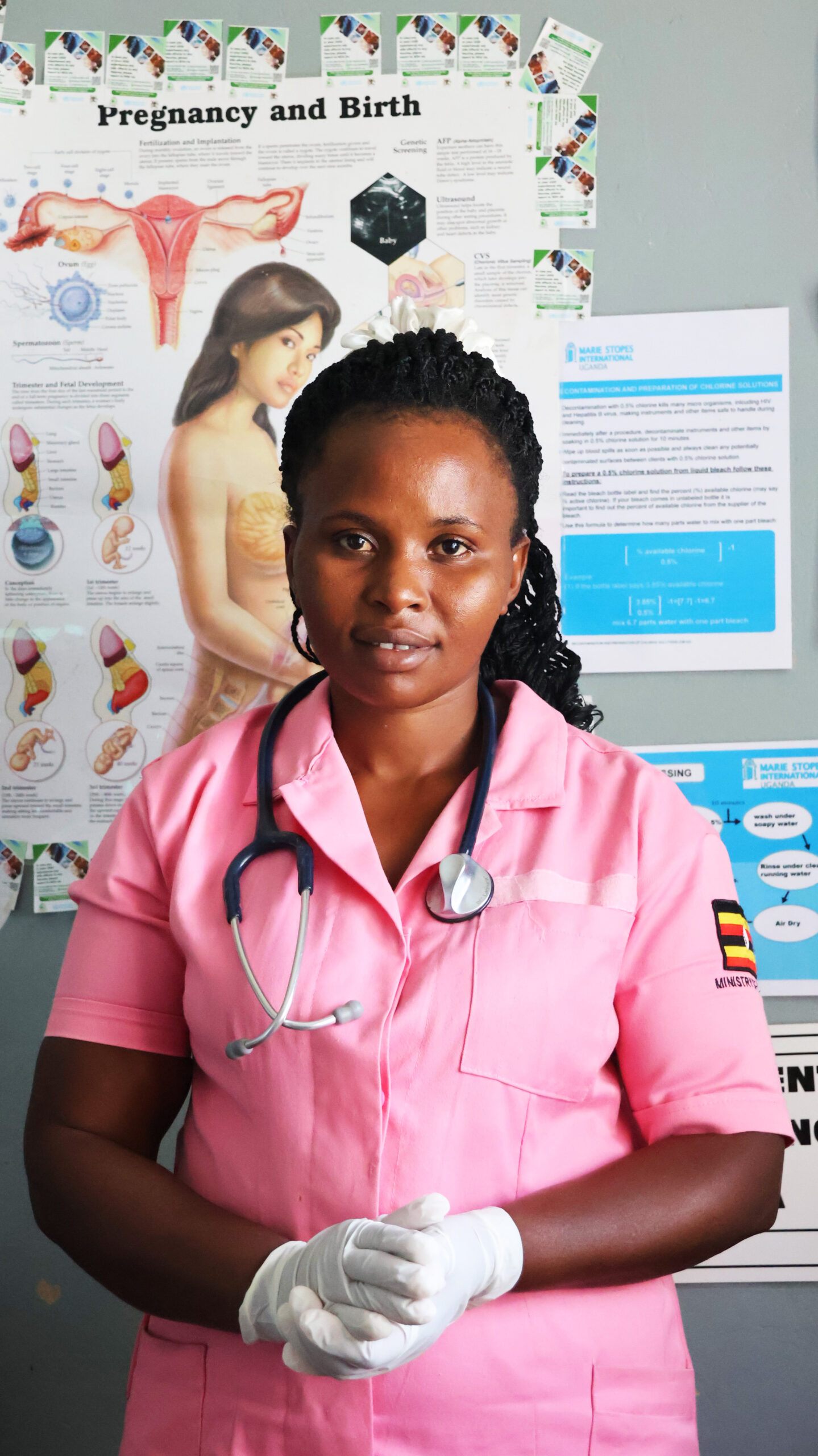
Nurse Sterina Hagenimana, Coordinator, Health Program at Mummy Drayton Clinic, Nyaka.
Sterina arrived at Nyaka with a first-aid kit and passion. Eleven years later, she has helped build one of Kambuga’s most essential health services.
Nursing Changes Lives in the Community
When Sterina arrived at Nyaka on 2nd May 2014, the clinic was offering only basic services, general consultations, home visits, and HIV screening. She saw immediately that there was more to be done.
“I viewed the situation and realized that my nursing role should not stop here,” she explains.
One by one, she proposed new services: immunization, then family planning, then antenatal care. Each was approved and supported by both her supervisors and the Nyaka organization. Today, those services reach grandmothers, students, and the broader Kambuga community, providing both preventive and curative care to people who have had little access to either.
“Many people from the community, including grandmothers, students, and kukiiza, are now benefiting through preventive and curative health care delivery.”
Work at Mommy Drayton Clinic
What began as a school health unit offering basic first aid to pupils has grown into a community facility offering general consultations, immunization, family planning, antenatal care, and even dental services. That growth is real and meaningful. However, laboratory services remain the most pressing gap. Without a lab, the clinic is limited to clinical diagnosis, which affects the quality of antenatal care and prevents the integration of services like cervical cancer screening into family planning.
Sterina’s Nursing Skills
Sterina affirms that she can practice within the scope of her training, but she is quick to note that standing still is not an option in health care. She feels a clear need for continued professional development and capacity building to keep her skills current and her care standards high.
Influence on Health Care Delivery
Sterina recalls a period when she and colleagues had the opportunity to visit other organizations with similar programs to Nyaka’s experiences that sparked real innovation. It was through one such visit that the idea of cost-sharing for sustainability was first introduced. But those opportunities have since stopped, and with them, access to health-related training has also dried up.
“We need to keep updated,” she says, pointing to a quiet but significant gap: nurses are not regularly being brought into the spaces where decisions about the future of care are being shaped.
“We no longer get opportunities to visit other facilities, and health-related training has stopped, yet we need to keep updated.”
The Biggest Strain on Nurses
The demand for care is growing faster than the clinic’s capacity to deliver it. Nurse Sterina points to the expanding service area, the need for integrated health delivery, and the continued absence of laboratory services as the core pressures. What Mummy Drayton needs most is straightforward: more staff and more equipment. Without them, the quality and efficiency of care for both patients and the wider community will continue to be limited despite the team’s best efforts.
National Desire for Nurses
Nurses are underpaid for what they do, and their work is too often invisible to those outside the ward. She and her colleagues at Mummy Drayton find comfort in their calling.
“We were chosen by God to love and serve His people.”
But they also carry a practical desire to better their training. Recognition, for Nurse Sterina, looks like an investment. It looks like a clinic that grows alongside the community it serves, and nurses who are equipped to grow with it.
Looking to 2030
The vision is clear and grounded: Sterina wants to see Mummy Drayton Clinic elevated to the status of a Health Centre III, fully equipped, officially recognized, and widely regarded as a role model health facility across Kambuga, in Kanungu district. It is not an abstract dream. It is the next logical step for a clinic that has already grown from a school’s first-aid room into the heart of a community’s health system. All it needs is the support to get there.
Gratitude and a Call to Action
“As we extend our heartfelt appreciation to all partners and supporters of healthcare in Uganda, especially those serving last-mile communities like Kambuga, we also call upon more well-wishers to invest in the health sector.”
While meaningful progress has been made, the need remains immense, and continued support is essential to ensure accessible, quality healthcare for all.